



Data centers and climate targets – what can we do?
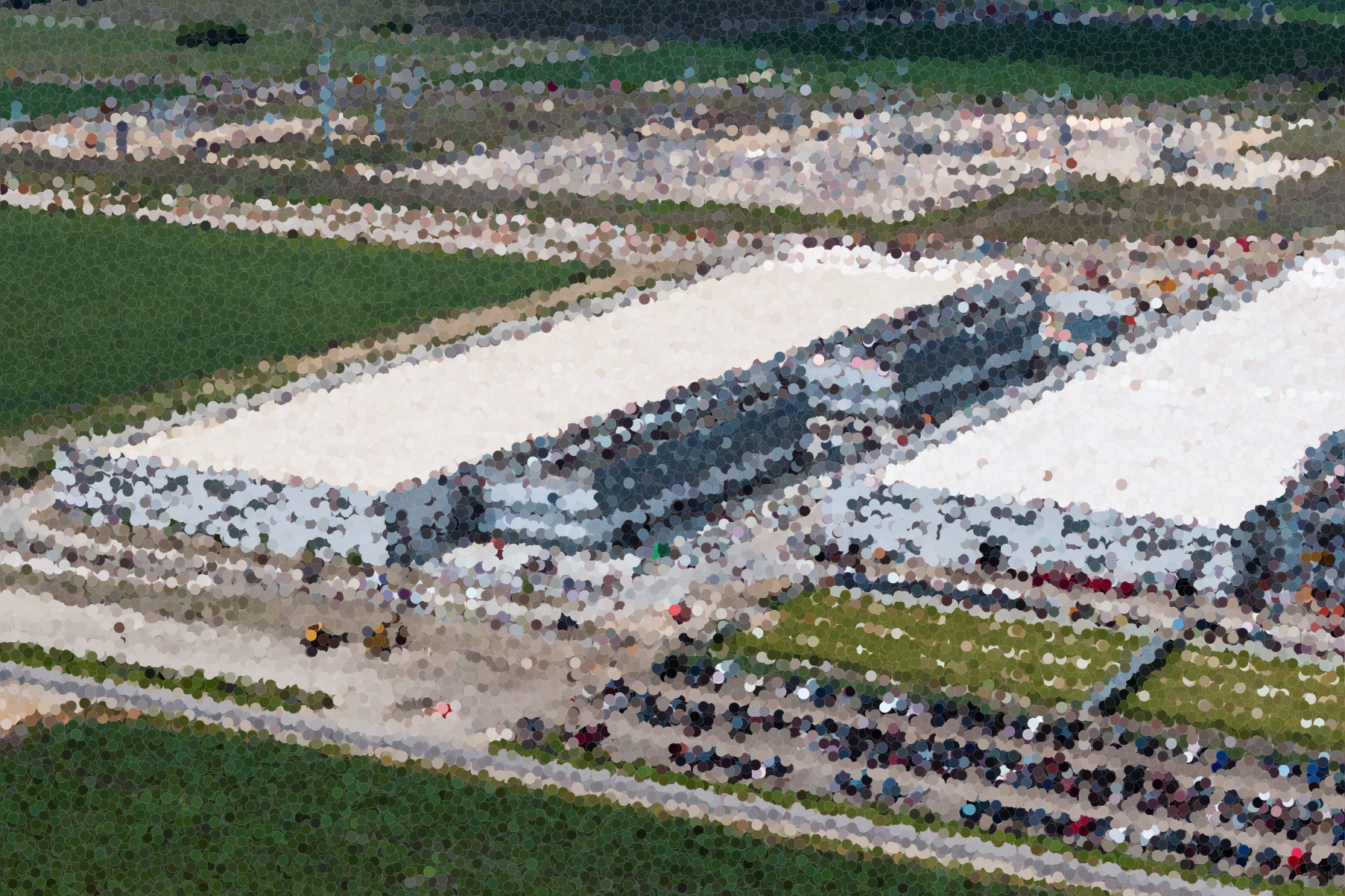
Rapid data center development is a major new challenge to decarbonizing cities and regions.


20 November 2026
Data centers consume huge amounts of electricity, produce waste heat, and reshape landscapes. SSG’s modeling tools help explore the effectiveness of potential policies and actions to address them.
Oregon’s existing and planned policies and programs could lower the state’s annual emissions enough to reach its 2035 greenhouse gas (GHG) target if it wasn’t for one thing: data centers.
Oregon’s cool climate, network of existing data centers, and favourable tax landscape make it well suited for data centers. The state currently has 111 data centers requiring 1.1 gigawatts of electricity supply. They used 23% of the state’s total retail electricity sales in 2025 and could reach 32% by 2030. 32 more facilities are planned or under construction. The state is not alone in wrestling with their impacts. Across the U.S., data centers could account for nearly 12% of total electricity use by 2030.
12%
share of total electricity use in the US by data centers by 2030
23%
share of Oregon’s total retail electricity sales used by data centers
SSG’s analysis: data centers are the largest opportunity to reduce emissions
SSG worked with the Oregon Department of Energy to model how different policy actions affect the state’s emissions. Oregon already passed House Bill 2021 (HB2021) clean energy law which sets emissions targets for investor-owned energy utilities. They must cut emissions 80% below baseline levels by 2030, 90% by 2035, and 100% by 2040. However, data centers built in rural and Eastern Oregon where consumer-owned utilities dominate (and aren’t subject to HB2021) use potentially high emissions electricity.
While the department had anticipated some impact from data centers on their emissions targets, SSG’s analysis revealed their outsized role in pushing Oregon off track.
SSG tested two measures to close Oregon’s 2035 emissions gap:
- All new data centers use clean energy, saving 3.9 million metric tons of carbon dioxide equivalent (MMTCO2e) annually, and
- All existing data centers switch to clean energy by 2050, saving 2.56 MMTCO2e annually.
Either measure would be the largest single action available to close the state’s gap to its emissions reduction target.
The Oregon Climate Action Commission and the state’s Data Center Advisory Committee can now use this evidence to develop policy recommendations in upcoming legislative sessions.
Energy use and rate challenges
Oregon’s Public Utilities Commission has warned that existing regulatory tools were not designed for the speed and magnitude of data center load growth. Energy costs could rise for all customers as the system leans on existing generators with higher operating costs.
One solution is for data centers to provide their own on-site power. However, a recent Cleanview report found that low-efficiency, high-emitting natural gas generators are the go-to choice.
Oregon’s POWER Act (HB 3546, 2025) requires investor-owned utilities to develop a separate rate class for data centers over 20 MW. The act also includes mechanisms to prevent cost-shifting to residents.
Tools to meet data center energy demand with clean energy exist, too. Rocky Mountain Institute’s analysis in Memphis showed that a combination of solar, storage, and demand response could offset nearly 65% of peak load for anticipated data center facilities.
Tools to meet data center energy demand with clean energy exist.
Understanding what levers are available and being able to analyze the future impacts are essential for being able to make informed decisions.
Looking ahead
Data centers are the latest in controversial development structures that communities have had to grapple with. Understanding what levers are available and being able to analyze and communicate the future impacts of these types of development will have on the landscape, infrastructure, and climate are essential for being able to make informed decisions. Communities will keep facing infrastructure decisions that lock in long-term outcomes across energy, emissions, water, land use, and cost. The decisions made today shape whether communities stay on track to meet their climate goals, or get locked into infrastructure that works against them.
There are precedents to look to for use in your community, including:
- Germany requires new data centers to reuse at least 10% of their waste heat, a share that rises to 20% by 2028. Siting determines whether that heat is a liability or a resource, and zoning and permitting decisions determine siting.
- Lancaster, Pennsylvania signed one of the first public community benefit agreements (CBA) for a data center, requiring $20 million for local economic initiatives, 100% clean energy, water use caps, and noise restrictions.
- Massachusetts requires data centers over 25 MW to procure 100% clean energy and has created a Ratepayer Protection Fund.
- Memphis passed an ordinance capturing 25% of AI data center property taxes to fund public projects within a five-mile radius.
- St. Louis included enforcement mechanisms: if tax revenue falls short of projections, the developer pays $15,000 for every $100,000 shortfall.
- The Climate Mayors alliance provides a model local law for responsible data center development.
- In Finland, Microsoft and Fortum use recovered data center heat to supply about 40% of district heating for 250,000 people.
About the Author

Carol (they/them) leads SSG’s business development in the U.S. by developing strategic partnerships, cultivating client relationships, and analyzing climate policies across the country. Trained as an urban planner and sustainable design specialist, with a background in cross-cultural studies, Carol takes a holistic approach to climate action, recognizing the potential for transformative societal and economic change.

Chris (he/him) builds simulation models to explore complex systems. He has led the analysis and modelling of energy and emissions related to buildings, transportation, industry, and land use for clients across North America. Chris brings years of experience modelling and working with complex, dynamic processes to inform his current work.
Contact Us
We can help you address the climate crisis and navigate the energy transition