



Getting Data on Data Centers: Cutting Through the Noise to Understand Their Climate Impacts
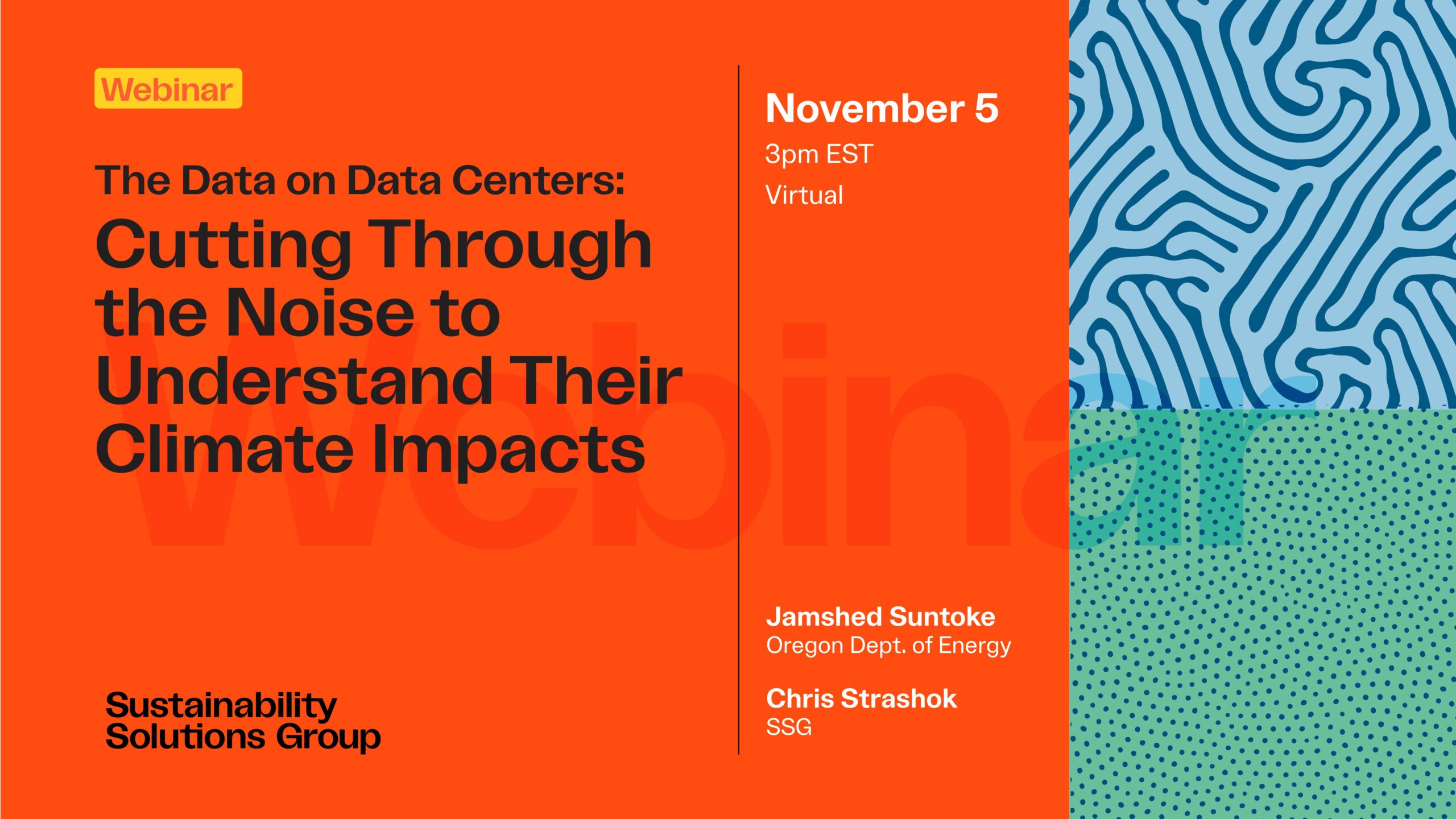
How could this data center boom impact electricity use and GHG emissions now and in the future?

27 October 2026
Data centers are popping up in nearly every community and region. You’ve likely heard about their energy and water use at a local level, but what are the impacts at scale?
Data centers are popping up in nearly every community and region. You’ve likely heard about their energy and water use at a local level, but what are the impacts at scale? How could this boom impact electricity use and GHG emissions now and in the future? And how might it impact your community’s climate goals?
Join SSG and Oregon Department Of Energy for a peek at how we approached some of these questions. We’ll walk through what GIS-based modelling analysis can reveal and why that can be important for decision makers at the municipal and/or province/state level. For example, results from Oregon show that there is a greater negative impact if data centers are developed in areas outside of investor-owned utilities, which are required to adhere to clean electricity procurement laws.
We’ll discuss how SSG’s insights and analysis are a necessary part of the picture for policy makers to get a practical understanding of the potential impacts of data centers and to understand how to address the impacts.
Date: November 5
Time: 3pm ET
Speakers

Jamshed currently leads the climate team at the Oregon Department of Energy. Prior to this role, he served for over 14 years with the federal government, including most recently as an attorney with the U.S. Department of Energy. In addition to his government experience, Jamshed has provided legal and strategic support to local non-profit organizations to advance land conservation goals and benefit communities.

Oregon TIGHGER Project Lead
Principal Consultant, Senior Modeller
SSG
Chris (he/him) builds simulation models to explore complex systems. He is driven to discover the stories that unfold on the pathway to achieving a low-carbon future with the clients he works with. He has led the analysis and modelling of energy and emissions related to buildings, transportation, industry, and land use for clients across North America. Chris’ years of experience modelling and working with complex dynamic processes informs his current work. His patience and knack for providing clear explanations were honed through teaching a graduate-level Systems Methods for Environmental Managers course in which he used systems dynamics to evaluate social, environmental, and economic indicators and explore how we interact together through systems of governance.
Contact Us
We can help you address the climate crisis and navigate the energy transition